Category: Designing Work That Doesn’t Hurt People
-
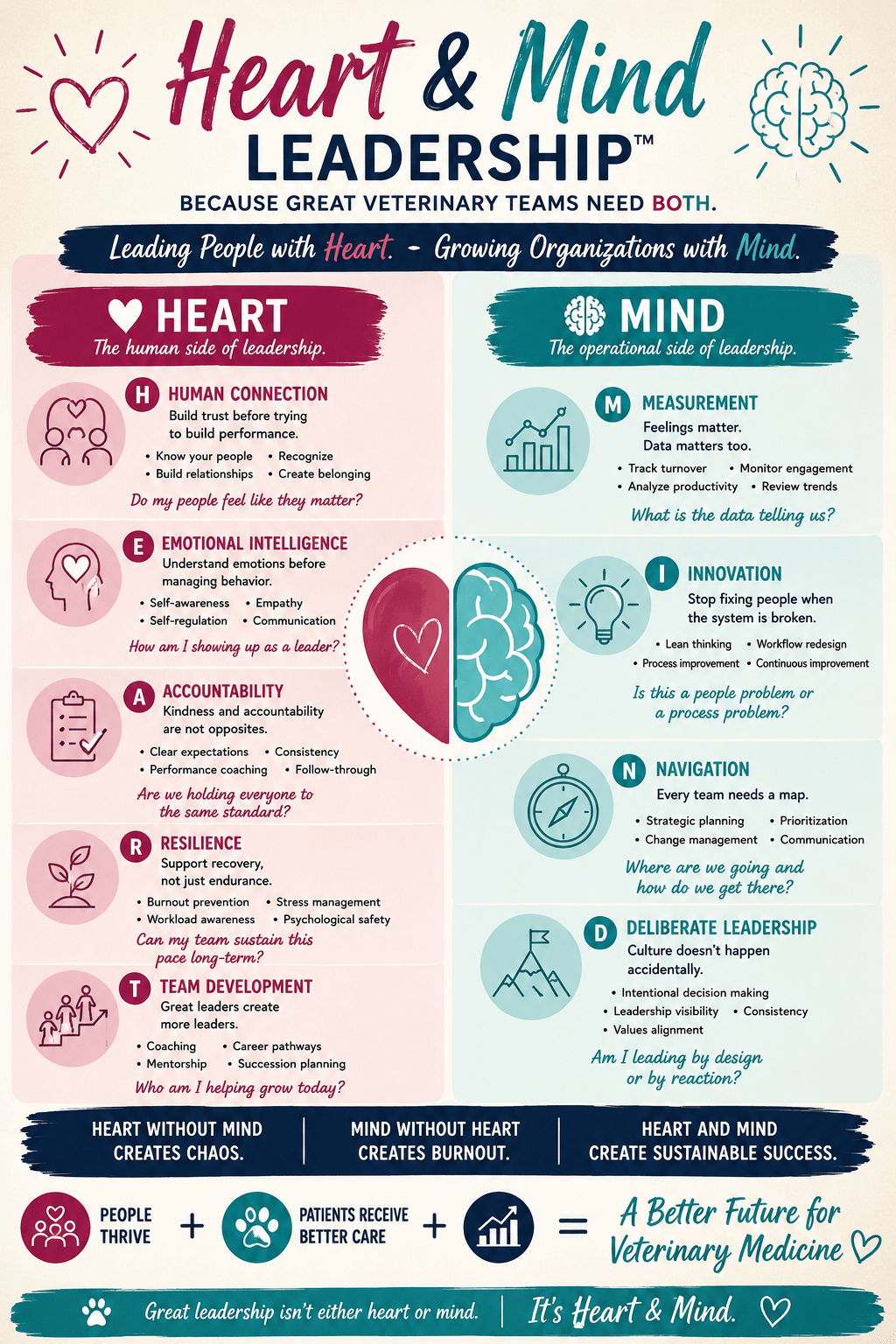
Heart & Mind Leadership™: Why Veterinary Teams Need More Than Compassion or Metrics
The Leadership Gap in Veterinary Medicine Veterinary medicine has never lacked heart. Every day, veterinary professionals show up for frightened patients, grieving families, and teammates carrying invisible burdens. They work long hours, miss holidays, sacrifice sleep, and continue giving even when their own emotional reserves are depleted. What veterinary medicine often lacks isn’t compassion. It’s…
-
Designing Work That Doesn’t Hurt People: Post 8
Designing for Sustainability, Not Survival What humane work actually looks like Many veterinary teams are not designed to be sustainable. They are designed to get through today. Cover the schedule.See the cases.Keep things moving. Survival becomes the standard. And when survival is the goal, exhaustion is treated as evidence of commitment rather than a warning…
-
Designing Work That Doesn’t Hurt People: Post 7
Why “Just Helping Out” Becomes Unsustainable The quiet creep of role overload “Can you just help out for a bit?” In veterinary medicine, this question is almost always asked with good intentions. A shift is understaffed. A case runs long. Someone is overwhelmed. Teams step in because that’s who they are. At first, helping out…
-
Designing Work That Doesn’t Hurt People: Post 6
The Emotional Labor We Don’t Staff For What teams are carrying that never shows up on the schedule Much of the most exhausting work in veterinary medicine isn’t technical. It’s emotional. Managing client fear and grief.De-escalating frustration.Holding space for moral conflict.Regulating team emotions during crisis. This labor is real work.And it is rarely staffed, scheduled,…
-
Designing Work That Doesn’t Hurt People: Post 5
When Efficiency Undermines Care The hidden cost of doing more with less Efficiency is often treated as an unquestioned good. Shorter appointments.Tighter schedules.More patients per day. In theory, efficiency improves access, productivity, and sustainability. In practice, when efficiency becomes the primary goal without guardrails, it can quietly undermine both care quality and team well-being. Efficiency…
-
Designing Work That Doesn’t Hurt People: Post 4
Schedule Chaos Is a Stress Multiplier Why unpredictability exhausts teams faster than workload When teams talk about burnout, workload usually takes the blame. Long days.Heavy caseloads.Too much to do. But there’s another factor that quietly drains people even faster than volume. Unpredictability. Many veterinary professionals can tolerate hard work. What wears them down is not…
-
Designing Work That Doesn’t Hurt People: Post 3
Staffing Ratios Are a Leadership Decision And they shape everything else Staffing is often treated as a logistical problem. Schedules.Budgets.Coverage. But staffing decisions are never neutral. They shape workload, communication, error rates, morale, and burnout long before any individual behavior enters the picture. From a systems perspective, staffing ratios are a leadership decision, not just…
-
Designing Work That Doesn’t Hurt People: Post 2
Job Design Matters More Than Morale Why pizza parties don’t fix chronic overload When teams struggle, the first response is often to boost morale. More appreciation.More recognition.More “fun” initiatives. While morale matters, it is often asked to compensate for something it cannot fix. Poor job design. No amount of positivity can offset work that is…
-
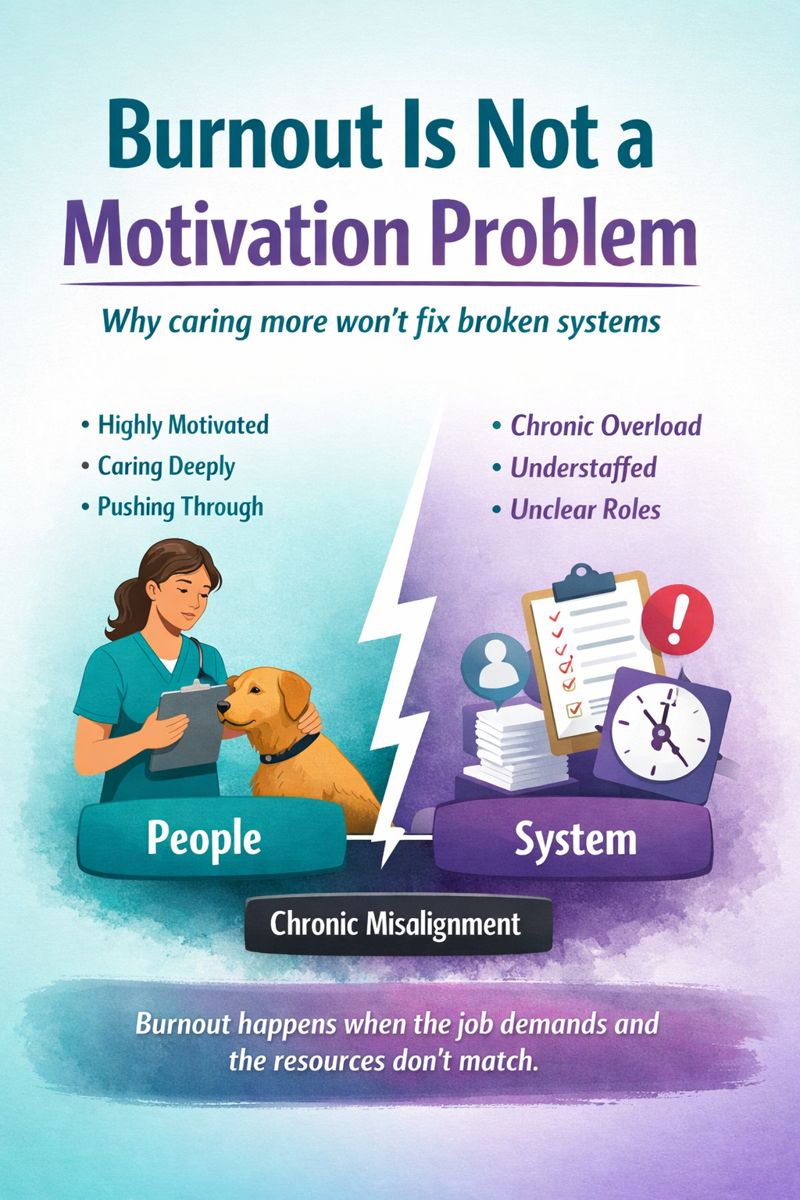
Designing Work That Doesn’t Hurt People: Post 1
Burnout Is Not a Motivation Problem Why caring more won’t fix broken systems Burnout in veterinary medicine is often framed as a motivation issue. If people are struggling, the assumption is that they need: More resilience Better coping skills A mindset shift A reminder of why they chose this work This framing is understandable. Veterinary…

