How to give and receive feedback without creating fear
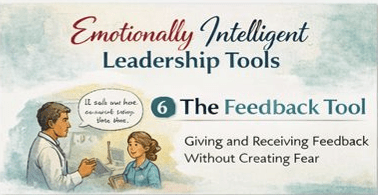
Feedback has a reputation problem.
In theory, it’s how people grow.
In practice, it’s often what people brace for.
In veterinary medicine, feedback usually arrives under pressure, between cases, or after something has already gone wrong. It’s rarely perfectly timed or delicately phrased. And because work is closely tied to identity, feedback often lands as something far heavier than intended.
Emotionally intelligent leadership recognizes this and designs feedback accordingly.
Why Feedback Feels Personal (Even When It Isn’t Meant To)
Feedback doesn’t exist in a vacuum.
It lands on top of:
- High standards
- Emotional labor
- Constant evaluation
- Deep professional identity
When someone hears feedback, their nervous system often registers threat before the brain has a chance to interpret content. That’s why even neutral comments can trigger defensiveness, shutdown, or over-explaining.
This isn’t fragility.
It’s biology.
A Familiar Pattern
I’ve worked under leaders who avoided feedback until frustration overflowed.
By the time feedback was delivered, it wasn’t guidance, it was a release valve.
The message wasn’t “here’s how to improve.”
It was “this has been bothering me for a while.”
In those moments, it didn’t matter how accurate the feedback was. The emotional tone made it almost impossible to hear.
Later, I worked with leaders who treated feedback as information, not judgment. It was timely, specific, and predictable. The difference in how it landed was immediate.
Feedback Is a System, Not an Event
One of the most common mistakes leaders make is treating feedback as a one-off conversation.
Emotionally intelligent teams build feedback into the rhythm of work.
When feedback is:
- Regular
- Expected
- Specific
- Grounded in shared standards
It loses its threat.
Surprise feedback feels like danger.
Routine feedback feels like data.
What the Feedback Tool Looks Like in Practice
The Feedback Tool focuses on how feedback is delivered, not just what is said.
It includes:
- Naming the purpose of the feedback
- Being specific about behavior, not character
- Connecting feedback to shared goals
- Allowing space for response and processing
It sounds like:
- “I want to share something to help us work better together.”
- “Here’s what I observed and why it matters.”
- “Let’s talk about how to approach this next time.”
Feedback framed this way invites learning instead of defense.
Power Changes How Feedback Lands
Leadership feedback carries weight—whether intended or not.
A casual comment from a leader can linger for days.
A frustrated tone can shut down a conversation instantly.
Emotionally intelligent leaders account for this power differential. They don’t walk on eggshells, but they are aware that their words land differently.
Awareness is not weakness.
It’s responsibility.
Receiving Feedback Is Also a Skill
Emotionally intelligent leaders model feedback reception, not just delivery.
They:
- Listen without interrupting
- Ask clarifying questions
- Acknowledge impact
- Take time to reflect
When leaders receive feedback well, teams learn that feedback isn’t a verdict—it’s a process.
When Feedback Is Missing or Misused
Without healthy feedback systems, teams often experience:
- Guessing instead of clarity
- Defensiveness instead of growth
- Silence instead of honesty
- Burnout instead of engagement
Feedback isn’t optional.
How it’s handled determines whether it helps or harms.
How to Start Using the Feedback Tool
You don’t need to overhaul everything.
Start by:
- Making feedback more predictable
- Being clear about purpose
- Separating behavior from identity
- Checking how feedback landed
Even small changes reduce fear.
The Takeaway
Emotionally intelligent leadership doesn’t avoid feedback.
It redesigns it.
When feedback becomes a shared, predictable part of the work, teams stop bracing and start learning.
That’s not softness.
That’s effectiveness.
Reflection question for leaders:
Does feedback on your team feel like information—or a test?
 Heart and Mind VetMed
Leave a comment