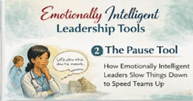
Why slowing down is sometimes the fastest way forward
In high-pressure environments, pausing can feel risky.
Things are moving fast.
Decisions need to be made.
People are watching.
So leaders push forward, talk faster, decide quicker, and hope momentum will carry the team through.
Sometimes it does.
Often, it makes things worse.
Why Stress Speeds Us Up (and Narrows Us)
When stress is high, the nervous system shifts into efficiency mode. The brain prioritizes speed over reflection. This is useful in emergencies. It is far less useful in communication, conflict, or decision-making that involves people.
Under stress:
- We hear less nuance
- We jump to conclusions
- We mistake urgency for clarity
- We escalate without meaning to
Teams don’t become inefficient because they slow down. They become inefficient because they move too fast while dysregulated.
The Pause Is Not Indecision
One of the biggest misconceptions about pausing is that it signals uncertainty or weakness.
In reality, the pause is a regulation tool.
Emotionally intelligent leaders pause to:
- Lower reactivity
- Create cognitive space
- Signal safety
- Prevent unnecessary escalation
Pausing is not about avoiding action.
It’s about choosing better action.
What the Pause Looks Like in Real Life
The pause does not require a dramatic stop or a long silence. Often, it’s just a few intentional seconds and clear language.
It sounds like:
- “Let’s slow this down for a minute.”
- “I want to make sure I’m understanding this correctly.”
- “Give me a moment to think before I respond.”
That brief interruption does something powerful. It tells the team that the moment can be handled thoughtfully, not reactively.
A Personal Moment That Changed My View
I’ve worked in environments where pausing wasn’t allowed. Silence was interpreted as incompetence. Slowing down meant you weren’t keeping up.
In those spaces, conversations escalated quickly. Feedback felt sharp. Conflict felt personal. Everyone stayed braced.
Later, I experienced leaders who paused openly. They named it out loud. They didn’t rush to fix or correct. They gave themselves and the team a moment to regulate.
The difference was immediate. The same problems existed, but the emotional tone shifted. People spoke more clearly. Fewer words were wasted. Decisions improved.
The pause didn’t slow the work.
It stabilized it.
Why the Pause Works for Teams
The pause works because it interrupts the stress cycle.
It:
- Reduces emotional flooding
- Prevents misinterpretation
- Signals that thinking is valued
- Creates space for collaboration
Teams don’t need leaders to be the fastest thinkers in the room. They need leaders who can keep the room steady enough for thinking to happen.
When Leaders Skip the Pause
When leaders don’t pause, teams often experience:
- Abrupt communication
- Escalated conflict
- Defensive responses
- Increased errors
- Emotional withdrawal
None of this happens because leaders don’t care. It happens because pressure compresses everything.
The pause expands it again.
How to Use the Pause Tool Intentionally
The pause works best when it’s normalized, not dramatic.
Leaders can:
- Model pausing themselves
- Name the pause without apology
- Invite the team into it
- Return with clarity and direction
Pausing doesn’t mean abandoning accountability. It means approaching accountability with regulation instead of urgency.
The Takeaway
Emotionally intelligent leadership is not about moving slower all the time.
It’s about knowing when speed is helpful and when it’s harmful.
The pause is a tool that helps leaders choose wisely.
In environments where stress is constant, the ability to slow the moment down is not a luxury. It’s a leadership skill.
Sometimes the most effective thing you can do for your team is pause long enough for everyone to breathe and then move forward together.
 Heart and Mind VetMed
Leave a comment